Much as Sweden’s Edvard Munch would have his greatest influences abroad in the fin-de-siclé of the 19th century, Dogme 95 has had a profound effect on world culture more than its influence on the film industry in Denmark. Munch fed the symbolism of Robert Blake and the violence and horror of Ernst Kirchner among the German Expressionists. Dogme 95 has amended the language of film concurrent with a renewed interest in documentary; it has also given license, indirectly, to millions of filmmakers making videos in internet subcultures. The success of The Blair Witch Project (1999) and An Inconvenient Truth (2006) demonstrate two perspectives on the changing nature of ‘realism’ and the world’s access to defining reality. The former proposes a realism in fiction, enhancing its attachment to the real world through low quality cameras, bouncing handheld camerawork and improvised dialog. The latter advances the documentary genre to include a performance in a controlled and scripted setting. Both edge towards the reality film has not been able to give us as a representative medium, despite its strengths.
The Dogme 95 manifesto was drawn up in one night in 1995 by Vinterberg and von Trier in frustration with the state of film production; fat, dogmatic and self-referential, “An illusion of pathos and an illusion of love.”[i] They published their minimal referendum on the state of film in Denmark as a collective of four directors, the first four to create Dogme films. Along with the bombastic manifesto railing against the bourgeois and espousing the avant-garde was an included list of ten Dogme Rules designed to facilitate the democratization of film through active research by professionals into the possibilities and tendencies of an unencumbered filmmaker through radically subjective and limiting rules.
Festen (1998)
Idioterne (1998)
In the mid ‘nineties Denmark produced only fifteen to twenty films a year, but in 1998 two Danish films were included in the Cannes Film Festival; Festen (The Celebration) by Thomas Vinterberg and Idoiterne (The Idiots) by Lars von Trier. This introduction to the first two Dogme films shocked international critics. Festen garnered praise while Idioterne received scorn. For both films their salacious plots earned them infamy.
Festen’s celebration pivots around a man’s son revealing his father’s incestuous past at the dinner table during his 60th birthday. The character driven plot revolves around three siblings all coming to the table with their own shady past and secrets. The eldest son Christian has been living abroad for over a decade and his return to Denmark for the occasion is unexpected. His twin sister Linda committed suicide in the very hotel where the celebration is taking place over a year ago, a lingering mystery that no one is ready to confront. Middle child Helene is a hedonist successful in media relations in the city. Her transgressions are broadcast through her scandalous love affair (with a black American) and her penchant for smoking (marijuana). Early in the film she discovers her sister’s suicide letter, which she attempts to hide, but Helene is dragged off of her laissez-faire fence by the increasing turmoil between Christian and the family. Youngest brother Michael is an outright louse, abusively negative to his wife and children, adoring and patronizing of his siblings and parents. While attempting to first keep the peace and later to right past wrongs Michael reacts violently. By the end of the film Michael has asserted himself within the family, cutting off ties with his father and becoming a domineering patriarch in his own right. Deviating from popular norms of the film practice, the ending to Festen is an open-ended statement filled with small victories but without a proper resolution of the main conflict.
Festen
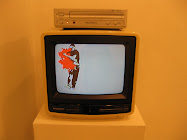
The film work, according to Dogme standards, is entirely handheld. Camera angles are most often at eye level or below, as in a home movie. Director Vinterberg held the camera himself as much as possible. He darts around rooms focusing on where the action is. Typically filmmakers frame their shot, excluding information by focusing on the edges of the lens. A more amateur, and intuitive method is employed here as the camera decides its placement by what is in the center of the frame, inclusive instead of exclusive.[ii] Several innovative placements ground the camera in real space. In one scene the camera rests on a table as hotel waitresses set placements for breakfast. While one does not identify with the camera as one’s eye, a referential realism is established through the concreteness of the recognition of real space, a relationship between the objects- the camera rests on the table- and an everyday recollection dismembered from the omnipresent perfection of the mechanically placed Hollywood camera. The early morning Scandinavian light is atmospheric, lending the air a warm grey light as employees in white shirts move rhythmically, clinking silverware in symphony. As Helene searches for her sister’s suicide note in a hotel room, the cameraman stands on an armoire, looking down on the scene from above. The camera’s unsteady frame in a human hand, the actors’ nonchalance as if alone along with the gravity of the search make the scene seem as if it is viewed from the perspective of a spectre, the presence of Linda perhaps. The Dogme project, beginning here in Festen, is an established plot style as well as a stylistic school from the outset, but as the movement internationalizes the aim of these films changes with differing cultural influences and perspectives on filmmaking.
Maria Falconetti, The Passion of Joan of Arc (1928)
Idioterne was rightfully described by its creator as "a film by idiots, about idiots, for idiots."[iii] Featuring an orgy and scenes of penetration, the film follows a group representing eleven types of idiot spazzing in public and squatting in an abandoned house. As the plot unfolds it becomes apparent that most of the group is pretending in order to escape from their societal obligations. Director Lars von Trier has found inspiration in the work of 1920s Danish director Carl Dryer, and sadistic tendencies define the method of both auteurs. For The Passion ofJoan of Arc (1928) Dryer sexually and emotionally tortured his actress in pursuit of the perfect onscreen performance by his lead, Corsican stage actor Maria Falconetti- who never appeared in a film again. Similarly von Trier invades the lives of his actors in an attempt to achieve the right emotional register to perform. Since most of Idioterne was filmed naked, the director also got naked for his role as cameraman. Many scenes required the normally sane actors to freak out, flop around and spout inanities, which the director encouraged on a regular basis as a social function of the community established around the making of the film. While not filming, the line between the characters and their creators- actors, crew and director- blurred in the small abandoned house where it was shot. The intense alienation from regular society was further complicated by the concurrent filming of a documentary on the making of the film, Radikal Idioterne, by Roberto Schinardi. Lars von Trier is controlling, paranoid and obsessed in his documentary moments (also shot as a Dogme film). The actors are emotionally tortured, absorbed into their adopted personas as much as the director is obsessed with his subjects. Idioterne transgresses in daily life as well as film practice, a larger experience surrounding the temporal film they are ostensibly gathered to create.
The third Dogme film is another complicated familial situation filmed by established Danish film and television director Soren Kragh-Jacobsen. Mifune (1999) centers on successful businessman Kresten and his relationship with his mentally handicapped brother Rud. Like Helene in The Celebration, Kresten is a representation of the hedonistic ways of success in the city in contrast to the historical temperament of Denmark represented here by the countryside and simpler or mentally handicapped persons. The brothers bond over a favorite childhood game, Kresten pretending to fight Japanese actor Toshiro Mifune- the lead in Seven Samurai and other Kurosawa classics. The impetus for the film was in fact the death of the legendary actor in December 1997, and Kragh-Jacobsen’s fondness for the actor throughout his career. Between Kresten’s new marriage in the city, his trip to bury his father where he rediscovers his brother, and a call girl on the run he hires to look after Rud; things are headed for a sappy love story. An about face from the genre of Pretty Woman and Risky Business, Mifune begins a similar love story with a repentant materialist executive and a hooker with a heart of gold. Bonding over their mutual devotion to mentally handicapped siblings, Kresten and Liva start a tentative romance in the run down shack where the brothers grew up and the feeble Rud now resides alone. The lover’s paradise never materializes as it did for Julia Roberts though, as the moralist slant so typical in major budget films is here subdued and contradictory. Departing from Hollywood norms, a purposeful ambiguity leaves the ending of the film hanging between dark comedy and tragedy.
The King is Alive (2000)
The forth of the “Fathers of Dogme” is young director Kristian Levring, and his second full length feature after a decade long hiatus The King is Alive (2000) is a masterpiece of cinematography and message. For unknown and diverse reasons eleven people end up on a bus headed ‘south’ out of Namibia. After hours, maybe a day spent traveling, the veracity of the compass is questioned- and deemed false. Where the group has appeared is almost magical. A former German silver mining operation, the long abandoned town is awash in sand dunes, an organic reclamation by the desert. The town is a desolate, picturesque ‘nowhere’; hardly shelter for the weary traveler. The first to die is the most able wilderness survivor of them all, and struggling to survive without feasible hope for rescue is taxing on them all. As the eleven begin their sharp decent into chaos, an intellectual among them suggests performing Shakespeare’s King Lear for their final act. All who are new to the plot participate in the morbid sketch as increasingly complex psychological and sexual dramas begin to unravel the stranded passengers. Levring’s camerawork is smart and controlled; he expressed difficulty with the Dogme ban on personal taste and aesthetics. The intense light and alienating darkness, the immense dunes of the Kalahari and the intimate faces of his actors all attached themselves to the director as he went about his work, not focusing his camera on action as much as framing his shots- albeit looser than conventional cinematography. Filmed on digital video and transferred to 35MM film, the saturated colors of the transferred medium glow with life. The pixilation of the original digital becomes soft edges and unusual gradients, but they do not diminish the documentary style of the film. Truly a masterpiece of this new style The King is Alive stands out as a picturesque detour on the road to democratized filmmaking.
Julien Donkey-Boy (2000)
The first American Dogme film was attempted by director Harmony Korine, who had made a splash in the ‘nineties with Kids and Gummo, two explorations of contemporary American teenage life, urban and rural respectively. Julien Donkey-Boy (2000) is ripped from the director’s own life, a portrait of his schizophrenic uncle who resides in the Queens Home for the Criminally Insane. The plot is very fluid, as the director worked from a framework instead of a proper script and encouraged improvisation on the spot. Korine constructed a twisted familial situation around Julien including a pregnant and delusional sister (Chloe Sevigny) and an abusive drug addled father played by Werner Herzog- one of the director’s heroes and the director of Aguirre, Wrath of God (1972), one of the most brutal portrayals of insanity in the 20th century by lead actor Klaus Kinski. Korine’s grandmother plays a role in the film that she may not even know she is playing; she does not know English and is in her seventies. In violation of handheld camera rules the director employs hidden cameras for his actors to interact with the ‘real’ world in several scenes on the streets of New York. Harmony Korine takes the reductive elements of film transfers to new lows with a process leading his film from digital video to 16MM and then blown up to 35MM, leaving a gritty, desaturated look. While the plot and pacing recalls the earlier Dogme films, the American environment prompts more violence, abstraction and surprise twists. With this film the movement began its internationalist trajectory, resulting today in 177 Dogme films from the world over officially sanctioned by the group.
Italian For Beginners (2001)
Danish films of the late 20th century tended toward nationalistic takes on traditional Hollywood genres. With Denmark audiences, films such as the nostalgic Twist and Shout (1984), romantic comedy Kinamand (2005) and crime drama Pusher (1996) performed very well, although they had much less success with non-native audiences. The art house Dogme flicks fared less well at home than their more traditional counterparts, although the enchanting Italian for Beginners (2001) was a breakout success for the box office and the art house. Lone Scherfig’s love story is far from lighthearted, but the dark emotion of earlier Danish Dogme films and their open ended plots is nowhere to be found. In keeping with such films Scherfig uses a loose script with much improvisation by her actors; the director’s devotion to them is palatable in her trust and her camerawork; and she delves deeply into the characters’ lives, heartbreaks and triumphs. Beginning with the new priest in town, Andreas, and his difficult time as a widower in a new city the film flows through several chance encounters that lead to an introductory Italian class at first populated only by older housewives. Andreas’ acquaintance Jorgen Mortensen is a bumbling and soft-hearted hotel clerk in love with a young Italian immigrant; Jorgen’s best friend Halvfinn is an angry cook that falls for a sensuous hairdresser with a tortured past and a good heart. As these and other couples begin to find each other the plot comes together without contrived Hollywood devices. A softening of the intentions of the original Dogme directors, Scherfig is innovative in her use of the specificity of the Rules without resorting to superficial action or genre devices.
Emily Watson, Bjork and Nicole Kidman
The non-Dogme films of Lars von Trier Breaking the Waves (1996), Dancer in the Dark (2000), and Dogville (2004) demonstrate the director’s familiarity with the strengths and weaknesses of the Dogme Rules. Breaking the Waves uses little overdubbing except for lushly shot transitions of the Scottish countryside, long single shots of beautiful scenery set to evocative Seventies rock classics. The camera is handheld for much of the film, and no special effects are used save the final fifteen seconds. Dancer in the Dark is exclusively shot according to Dogme rules except for hallucinatory dance sequences for which the director used dozens of tiny camera set in strategic spots in a metalworking factory, and the fact that he shot it in Sweden and set his film in America in the 1960s. Dogville cleverly inverts the Dogme dictum against constructing a set for a film by employing the minimal theatrical device of the theatre play Our Town using an imaginary set in a soundstage defined by drawn lines on the floor and clearly labeled areas of action- “Street”, “Old Mill” or “Tom’s House”. Mixing handheld and machine steady shots, von Trier has taken the lessons of his Dogme years into the international world of film without losing his revolutionary zeal and has become a star in his own right. Working with Emily Watson for Breaking, Icelandic singer Bjork for Dancer and Nicole Kidman for Dogville, von Trier has kept up the directorial dictatorship of his hero Dryer throughout the past decade, leading Bjork and Kidman (at least) to say they would never work with him again.
As early as 1999 Thomas Vinterberg declared the Dogme experiment dead, adding that it would still probably be good for directors to make one Dogme film in their lives. The revolutionaries believed that their creation had already started to become institutionalized, and for that reason was no longer viable. The Dogme ‘genre’ can be seen in American films Anniversary Party (2001) by Jennifer Jason Leigh, who acted in The King is Alive and Me and You and Everyone We Know (2005) by artist Miranda July of learningtoloveyoumore.com. Meanwhile, the Hollywood blockbuster has shown no sign of slowing in our new century; they have learned nothing from their Dogme counterparts. Instead the revolution has been broadcast over the internet, with unconscious following of the Dogme Rules proliferating on sites like Google Video and Youtube. The self-fulfilling prophesy of Thomas Vinterberg and Lars von Trier has not set filmmakers free from the constraints of technological advancement, but it has become reality for the rest of us.
[i] Von Trier, Lars and Thomas Vinterberg. Dogme95 Manifesto. Self published. 1995. [ii] von Trier, Lars. Dogville. Director’s Commentary. 2004. [iii] http://www.filmfestivals.com/cannes98/c98us.html.
The University of Houston art department has really been engaging this spring, stocking large amounts of lecturers and visiting artists into the last few months. If you missed the Intermedia Lab exhibit at G Gallery in the Heights check out the Collaboration projects on the third floor of the Lawndale. Hurry up! New things like this never stay up for long. The Intermedia Lab was composed of artists with one notable writer (who sold all of her drawings opening night); Collaboration is composed of teachers and students of many departments working in small cells. Both exhibits excelled in energy and depth, boding well for the school and the city’s future.
Speaking of the city, they’d better put that rail line right down Richmond. Sorry to be insensitive but you can’t pay attention to a few landowners when Houston needs a spine. Uptown Galleria needs congestion relief, Downtown Montrose needs an audience. Hell, imagine a 24 hour rail line about ten blocks from most shit you’d want to go to? It’s not like people would ignore it, the short line they have now carries 40,000 people a day. I want to be able to quit driving.
Rice University’s “Art for Profit” is going to have a tough time living up to last year’s great show, the Art Guys curated this one though, and its funny that the press release has a whole paragraph on their history. Hmmm…
Down at CSAW, I Love You, Baby is back in circulation, filling their iloveyoubaby.org site with creamy nonsense for the first time this year. Lots of it involves guns.
Thank you goes out to William Betts after holding down the fort as Interim Director of the Lawndale Art Center as they searched far and wide. After Christine West settled in as Director Betts bowed out as Chair of the Programming Committee, where he forced more than fostered but succeeded in starting a resident artist program that will be a lasting legacy; and also opening two third floor galleries, outdoor spaces and hallways as new places to exhibit in the Lawndale. He will be missed but never forgotten by that building on Main Street.
Sunday, May 6th, Leslie Hewitt joins the subjective circle of speakers who have made “The Artist’s Eye” talks at the Menil wildly different with “On Andy Warhol (3:00 pm). May 11th opens an exhibit of great mid-century painters that was bequeathed to the Menil Collection by David Whitney. With seventeen precious Jasper Johns drawings at the heart of the exhibit, look for the not-too-shabby fringes to be full of seldom seen Oldenbergs, Lichtensteins and Warhols.
Monumental? Not so much. Personal? Naah… Evocative? No, not at all. To the average visitor to the Menil Collection these days the exhibit furthest to the left- past the vitrines of Tlingit masks - must seem like an irritating joke. Wandering through what seems to be a bunch of cardboard boxes nailed to the wall or rolled in sand and set piled on the floor must be a frustrating experience for anyone looking for the Picassos. Maybe a little lyricality permeates this disdain constructed by a perception of worth through traditional materials. The rhythmic placement of familiar, throwaway forms needs a bit of attention to be appreciated, but recognizable forms like airplanes emerge in Nabisco Shredded Wheat and Bende de Sureté / Twin City / Nipples. Centrally focused rectangular works hold a picture plane, even if the image is made by staple holes, masking tape and the name CASTELLI. Maybe it seems pathetic- even to someone familiar with the blistering juxtaposition of images central to Rauschenberg’s Combines of the 1960s. Imperceptible to viewers is the process of the artist; moving away from New York, living on an island, at a time when he could have rested on his laurels and reproduced his acclaimed images in luxurious retirement.
Even before entering the cul-de-sac darkened gallery one has the chance to compare an equally massive Northwest American Indian tapestry with Rauschenberg’s Radiant White / 952, a sprawling narrative of boxes dismantled and distressed but without obvious trace of the artist’s hand. With a little bit of backing up one can see the two large works at once, both narratives not tailored to be preserved in museums under ideal conditions. The former work’s transcendent nature is established anthropologically as one in a series- this painting will decay and be repainted, recreated. While Rauschenberg’s intent was to have his work sold and preserved he could not have known how long his compositions would last. The usually enlivening natural light provided by the unique ceiling of the Renzo Piano designed building is cut off here in the Cardboards and Related Pieces exhibit to preserve the dangerous state of color in the medium. They are all mounted on plywood and have a matte fixative coating- both steps Rauschenberg took to mitigate their susceptibility. Rauschenberg didn’t sell one at the initial opening in 1971. Quite a blow to the sustainability Robert has now shown through five decades of practice, this uncertain time in the artist’s career is demonstrated through the need to recover many of his paintings from European collectors in order to mount this exhibit. Why take such a radical, unreliable step at a peak of the artist’s career?
To historicize a bit some works like Untitled (cardboard) and several of the Venetians look back at Eva Hesse’s relation to the floor and flexible materials; and Lake Placid / Glori-Fried / Yarns from New England seems to look to Joseph Beuys with the impression of a narrative emerging from a simple staff into real space. Rauschenberg did not veer far from the path of thought he had helped forge in New York in the 1960s. Nearly monochrome paintings were the artist’s forte after he left Black Mountain College in the 50s with a bit of a Joseph Albers hangover, so the solid sandy-mud brown of cardboard filling space was not foreign territory to him- perhaps reflecting on Donald Judd’s writing about space as well. Some of those early monochrome paintings hang with the Picassos on the other side of the building. The beaten, pliable, very human cardboard varied much from Minimalist work; and distress was never cleverly hidden in the Combines the artist constructed in the debris-filled streets of New York, as the world convulsed with the upheaval of the 1960s. To paint all of these influences with an imperceptible brush Rauschenberg deconstructed himself on CaptivaIsland. In the face of the impressive beauty of nature and without the typical discarded materiel of his last body of work in New York, Currents #55, the artist returned to impressions of Albers’ vibrant reductive paintings, finding his own vernacular in his environment and in clarity of composition.
The first body of work, from 1971, is labeled under the subset (cardboards), and these painting take up the first four or so galleries- mixed slightly with the Venetians of 1972-3. Angularity is the mode here; Rauschenberg constructs rectangular picture planes for some works. They are missing the negative space of the more sculptural narratives and uneven rhythms of some longer, more complex works demanding the wall behind them be seen as a ground. Reaching out from the wall in regular, referenced heights determined by the material, boxes become vessels, voids, pyramids and towers. In the opening gallery on your left Gun Tackers / Skin Pack / Brushes / ITT / Glass holds serene service over the rest of the room with a centralized trinity of large boxes; several smaller boxes crowd together suspended by twine reaching up for the downward open end of the central box. Entering the second gallery the brilliant color of Volon is uncharacteristic of the typical cardboard box. The work reveals a bit of its brown undercarriage in wear and tear- illuminating the earthy qualities of the large expanses of cardboard in the rest of the exhibit through sharp contrast thrown by the color as a highlight in an expanse of aqua blue. Also in this gallery is a familiar work to the regular Menil visitor, National Spinning / Red / Spring, which is owned by the Collection and has resided next door to the Warhols in the museum for the last two years.
As Rauschenberg obsessively focused on his medium in 1971, he began to consider the banal branding, record-keeping and shipping labels worthy of a little tweaking. First hand-printed pieces of torn tape and distressed labels appeared in the Cardbird boxes; the artist focusing on the reproduction of an object most would ignore as detritus or actively discard as waste. I imagine someone threw out one or two of the works as they were first introduced, and I hope Rauschenberg laughed his ass off at his own absurdity. In another experiment, the decidedly smaller Tampa Clay Pieces appear without the epic construction of the larger wall pieces, even more boring. Going to throw out one of the pieces would shock the hell out of you though- the heavy unglazed clay is molded and colored perfectly to simulate a much lighter material, the cognitive snippet of an illegible label adds to the object’s throwaway appearance. Both groups of work were made in small editions with the help of artisans, experimenting with printmakers at Gemini G.E.L for the Cardbirds and Graphicstudio Florida on the Tampa Clay to figure out how to create them.
Concurrent with such an investigation into his material, Rauschenberg moved forward with his minimal compositions by embracing emotional curves and more fluid materials. Nastier trash. Trash that has been in a wet gutter for a week. Tar paper mashed into slashing amorphous brushstrokes. Sackcloth and soiled, wet cardboard mashed into turbulent waves and leathery skin. Usually titled Untitled (Venetian) although there are exceptions, this series was inspired by trips to the Roman city of Titian and Giorgione and their violence of expression and penchant for emotional outburst is alive in the crumbling, magically gruesome contextualization of worthless materiel lurking here in the darkened gallery.
Less connected by experience is the Untitled (Early Egyptian) series featured in the last (or the second) gallery in this circular exhibit. While the artist did want to travel to Egypt, he never did make it there, content to study in books and his own imagination the implications of early Egyptian art, artifacts and life. The resulting pieces carry the thought of a man slathering glue on ten-foot boxes and rolling them in the sand on a Florida beach, a whimsical construction for the most mystical of the cardboards. Behind utterly banal vertical constructions familiar to anyone who owns a garage. The artist painted hyper-neon colors that become light- a faint fluorescent glow- when the work is about eight inches from the wall. Peer around if the guards let you and the source of light is a flat plane of paint; either exposing the Early Egyptians as fake antiques or lending a mythic glow to what appears to be boxes covered in sand. Through the Venetians diverse found materials began to creep back into Rauschenberg’s mind, and a bicycle included in one Egyptian seems to signal the artist’s intention to return to the land of imagery after purging from his work the very thing that made his career in the 60s after four years.
Hopefully a cathartic period in the artist’s career, the early 70s were a painful time for much of the progressive movements and utopians of the previous decade. Hunter S. Thompson put it vividly; “you can go up on a steep hill in Las Vegas and look west, and with the right kind of eyes you can almost see the high-water mark — that place where the wave finally broke and rolled back.” Much of the art world felt the same sentiment; political artwork grew sharper and harsher than Rauschenberg’s collages and Combines that won him the Grand Prix at the Venice Biennale in 1964. Minimalism and Conceptualism tried to wipe imagery and the object off of the map. Painting was dead, as it has been many times since. Though Rauschenberg’s work received quite amiable criticism at its introduction in ’71, it was not the success his previous work had established. It has been thirty years and only now are the Cardboards receiving retrospective attention.
Are we “filling in” the artist’s career by exploiting his lesser works? I like the show too much to agree with that, and it seems perhaps very relevant to art now. Cardboard has grown in acceptance as an art medium in the meantime, as has impermanence in general. Making the world more real by exploiting perceptual and conceptual breakdowns, or “a filter to make it look more real”, is appreciated and these Cardboards benefit from that. Radical restrictions and the resulting focus of imagination or clarity is a focus of contemporary work by artists like Andrea Zittel and Lars Van Trier’s films. Hell, it was even on Oprah last week. Rauschenberg started off where anyone does; you begin with the possibilities of the material. The image of JFK floating under an astronaut is lodged in art history as these cardboard constructions will never be, but in the frame of our new century this group of works evoke the complexity of even the simplest of structures and an exercise of impermanence that we can see reflected widely and often in art today. Perhaps the preservation of objects, ideas and artwork is the responsibility of the art world- not in making them permanent, but in constantly remolding the object in our eyes. The boxes will one day be archaic, the labels are already nostalgic. While they are still within our grasp as ordinary objects they evoke a strong disdain for the commodity of it all, especially important to be preserved by the institution.
If you want to know who sits on the boards of the most powerful oil companies in the world (or in town) check out Anthony Thomas Shumate at the Art League Houston this month; if you want to know where he stole the idea for his Illustrator illustrations stop by theyrule.net. Their Inversion coffee shop down on Montrose is doing very well; I see yuppies outside there every day.
The engineer of some of the strangest paper maché creations ever made, Jesse Lott has had his distinctive creatures and people exhibited in Houston for the last twenty years. This April 7th he opens his newest exhibit at G Gallery in the Heights. If you google him you get a Republican somewhere in California running for minor office. Call 503-659-1704 and tell him you like his art! Stop off next door to G at Redbud and peruse Bernd Baumgard’s new German paintings while you’re north of Washington Avenue.
Zeitgeist Collective, a study in vernacular dissonance, is hopping into the curator business with an exhibit at Notsuoh (314 Main) April 13th featuring Adrian Landon Brooks, Julia Sinelkova, Travis Gorman, Eli Sebastian Brumbaugh, Shawna Mouser and Matt Messinger among others. Whether the Zeitgeist or the Collective show up, you’ll have to go see to find out. Next door to Dean’s in downtown where they have been running exhibits for a couple of years, the reopening of Notsuoh bodes well for the reemergence of art outfits in downtown just as the rest of the city is giving up on it. Maybe all those empty remodeled spaces could be put to some light work?
Free film this April outside the Menil on Saturday, April 14th at 8:30pm! The Aurora Picture Show will be screening two rare Warhol films guaranteed to put you to sleep unless you hit the syrup real hard. Bring a bottle. Exhibiting “Andy Warhol Paints Mao” and “Andy Warhol Mops Hammer and Sickle”.
Hop on down to Commerce Street Artists Warehouse on April 14th for the last opening in the hulking warehouse before the summer oppression sets in, this month CSAW presents Goin’ Mobile featuring Austin, Beijing, New York and San Antonio artists curated by Kimberly Aubuchon. Those kids have been throwing some killer openings in the past few months; expect this one to be out of hand as well!
Speaking of San Antone, I wonder how Houston artists Robert Pruitt and Hana Hillerova have been doing in their recent work down the block from the Alamo. Check out Pruitt’s latest at artpace.org, to see Hana’s work you may have to drive to the desert since Sala Diaz’s content is a little harder to find- just like the seeking of universal religiosity that her show is based on.
Congratulations to artist Frank Rose for being able to put his balls on the line! Frank recently bought Artshouston magazine, reputed for being filled with news about the opera and the Alley that no one wanted to read. Starting May 2007 look for some subtle changes (don’t want to upset the advertisers) that may lead to a magazine with real content on Houston newsstands. Extra congrats to Frank and Kara Duval on their recent wedding down in Galveston!
Hint next time you go by Diverseworks: Don’t drink the Kool-Aid.


 Posts
Posts