Friday, July 25, 2008

July 18

This is filmed according to DOGME rules.

Saturday, July 12, 2008

Burning Pertochemicals


Freeways in Houston

All freeways in Texas have feeder roads running along the main thoroughfare. You can U-turn at almost any exit.

Do not depend on the posted speed limit on Houston freeways. Most traffic moves along at 75-80 miles per hour at all times.

Some freeways in Houston have up to 12 lanes of traffic. Many of the wide underground freeways are also retention ponds to slow flooding in the city.

Houston has a “Safe Clear” policy on its freeways to ease the flow; what this means is that if you break down on the freeway you must be off the side of the road within six minutes. If you are having car trouble try to get off the freeway or you will be subject to a mandatory $75 tow. Drivers with flat tires, empty gas tanks and easy-to-fix problems not in main lanes of traffic will be eligible for a free tow up to one mile.

Be aware of the erratic driving of street racers at night, usually on 610 or outside the loop to the west of the city.


I-10 Katy Freeway (E-W) Baytown and Beaumont to the east and Katy and San Antonio to the west.

Don’t drive on I-10. The I-10 and 610 Loop interchange is ranked as one of the worst in the nation and costs commuters 25 million hours of delays a year. If you can avoid the construction between Beltway 8 and 610 Loop on the west side of town then it is not so bad, but it is 12 lanes filled with big rigs on their way between California and Florida. Let’s just say they might be a little sleepy. Allen Parkway and Memorial Drive are two scenic and convenient east-west alternatives to I-10.


Freeway Jim


59 (SW-NE) Sugarland and Corpus Christi to the south and Humble (pronounced Umble) and Texarkana to the north.

59 South is one of the largest freeways in the country. Traffic is heavy outbound most afternoons and inbound on weekdays in the morning. From the Montrose neighborhood you can cross bridges over sixteen lanes of traffic at Montrose, Mandell, Dunlavy and Woodhead.

59 North is a good option to get from the Galleria to Montrose via the Shepherd exit or Downtown via the 527 Spur. The Montrose entrances to the freeway southbound are at Shepherd at Richmond and Richmond at 527 Spur. Exit 59 South at the 610 Loop North to reach the Galleria at Westheimer or the Omni Hotel at Memorial Drive.


45 (N-SE) The Woodlands and Dallas to the north and Pasadena and Galveston to the south.

45 is a useful way to reach downtown, and exits at Allen Parkway and Memorial Drive drop one off in the heart of the city. Driving south to Galveston takes an hour on average, traffic mostly occurs on early weekend afternoons when it is sunny and warm. Expect delays at Clear Lake, but they are usually temporary.

The George (not W) Bush Intercontinental Airport is north of the city located past Beltway 8 between 45 North and 59 North. Either freeway will get you into the city or out to the airport. Travel time to downtown is usually an hour at high speed, but morning traffic in or afternoon outbound can be a headache. Hobby Airport is located on 45 South about 30 minutes outside the city center. The first four exits outside the 610 Loop access the airport, so if you miss a sign it’s OK.


Houston Traffic SUCKS!
Freddieelm

610 Loop

This freeway passes the Port of Houston on the east, the Astrodome to the south, the Galleria on the west and nothing of note to the north. Every 610 junction is a traffic hazard. The traffic on 610 is usually decent except to the southwest near the city of Bellaire. Whenever there is a hurricane people drive around on 610 videotaping the damage and drinking beer in the backs of trucks.


Beltway 8 (Loop) and Sam Houston Parkway and Sam Houston Tollway

The Beltway connects most of the suburbs of Houston. At some points it is free, but at times it is a tollway. If you have gotten on the Beltway at a junction, the first exit afterward is usually free.


288 (S) Begins at 59-45 junction in downtown Houston, south to Lake Jackson and Surfside Beach.

288 can be a welcome alternative to 59 when the freeway is backed up outbound. Use 610 West to arrive at the Galleria.


290 (NW) Begins at 610 Loop northwest corner, west to Cypress and Austin.

Heading to Austin? Watch your speed in the outlying suburb of Jersey Village.


Art Car Parade on Allen Parkway

Other major thoroughfares

Allen Parkway- a pleasant drive along Buffalo Bayou Park, Allen Parkway connects Shepherd Drive to downtown Houston and I-45, with exits at regular intervals. The parkway is a winding road with at 35 mph speed limit. East-West.

Memorial Drive- a bit straighter than Allen Parkway, Memorial runs parallel on the other side of the bayou. From 601 West to downtown, exits are located at Shepherd and Waugh in Montrose. There is no Montrose exit, use Shepherd or Waugh as an alternative and turn left at Westheimer Road.

Montrose Boulevard- Montrose splits from Main Street at the Mecom Fountain next to Hermann Park and proceeds north through the Museum District and the Montrose neighborhood. At Washington Boulevard and through the Heights Montrose is known as Studemont, and past 610 on the northside as Studewood. Some traffic, lots of restaurants, museums and clubs. North-South.

Alabama Street- Alabama runs parallel to Westheimer and Richmond, with the former to the north and latter to the south. It begins in the east at the University of Houston and runs through the 3rd Ward and Montrose past the University of Saint Thomas. Alabama continues until 610, where it abruptly ends at the Galleria Mall. Alabama is the most laid-back of the major inner loop streets and is recommended if afternoon traffic is bad elsewhere. East-West.

Wednesday, July 9, 2008

Galveston: Faded Glory


The Storm


Galveston was a thriving metropolis in the year 1900, when a Category 4 hurricane leveled much of the city and was the deadliest natural disaster to ever strike the United States. The vulnerability of the city’s shipping trade encouraged inland development, and paved the way for the Port of Houston, which gave the city its moniker “Where 17 Railroads Meet the Sea”.


Today much has changed in the region, but Galveston is still a city of late 19th century architecture. Many of the large mansions on Broadway are from the era before The Great Storm. The City Cemetery along Broadway Boulevard holds tombs, statues and graves dating back to 1847, many done in a style reminiscent of New Orleans. Much of the city is still Victorian homes with hurricane shutters, much like Key West.


Much of downtown has been restored faithfully, and husks of old red brick industry are visible from the pier alongside the revitalized tourist industry on “The Strand”. The Strand features many small shops, candy stores, art galleries and margarita stands, attracting many visitors for spring break. Both families and college students flock to Galveston in the spring, and local motorcycle clubs mix with tourists waiting to embark from cruise liners during the summer.


Galveston's beaches are much cleaner than in the past. With the island's population showing greater concern for their environment, washed-up seaweed is now only moved back from the water's edge to allow the natural buildup and preservation of the beaches. Gulf waters are usually quite warm, owing to equatorial flow into the Gulf of Mexico and the shallow waters of the Texas coast. Looking to the future of the energy trade in renewable sources, Houston companies have recently begun exploration to create wind farms off the coast of Galveston.


Moody Gardens

Moody Gardens is a major attraction in Galveston; the three glass pyramids hold an aquarium, rainforest biosphere and science themed activities along with an IMAX theater and Palm Beach, a landscaped sandy area with freshwater lagoons.


Larcher

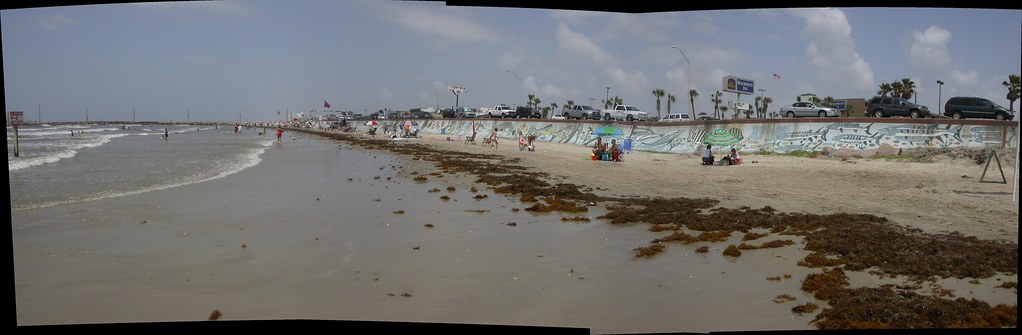
The Seawall is a great place for a walk on the beach, the wall facing the ocean is covered in murals and large graffiti tags. A 12 foot barrier built to protect the city from coastal flooding, the Seawall’s absence on the edges of the city had prompted most buildings to be built on stilts or risk their lives.

Sunday, July 6, 2008

A Little Silly History
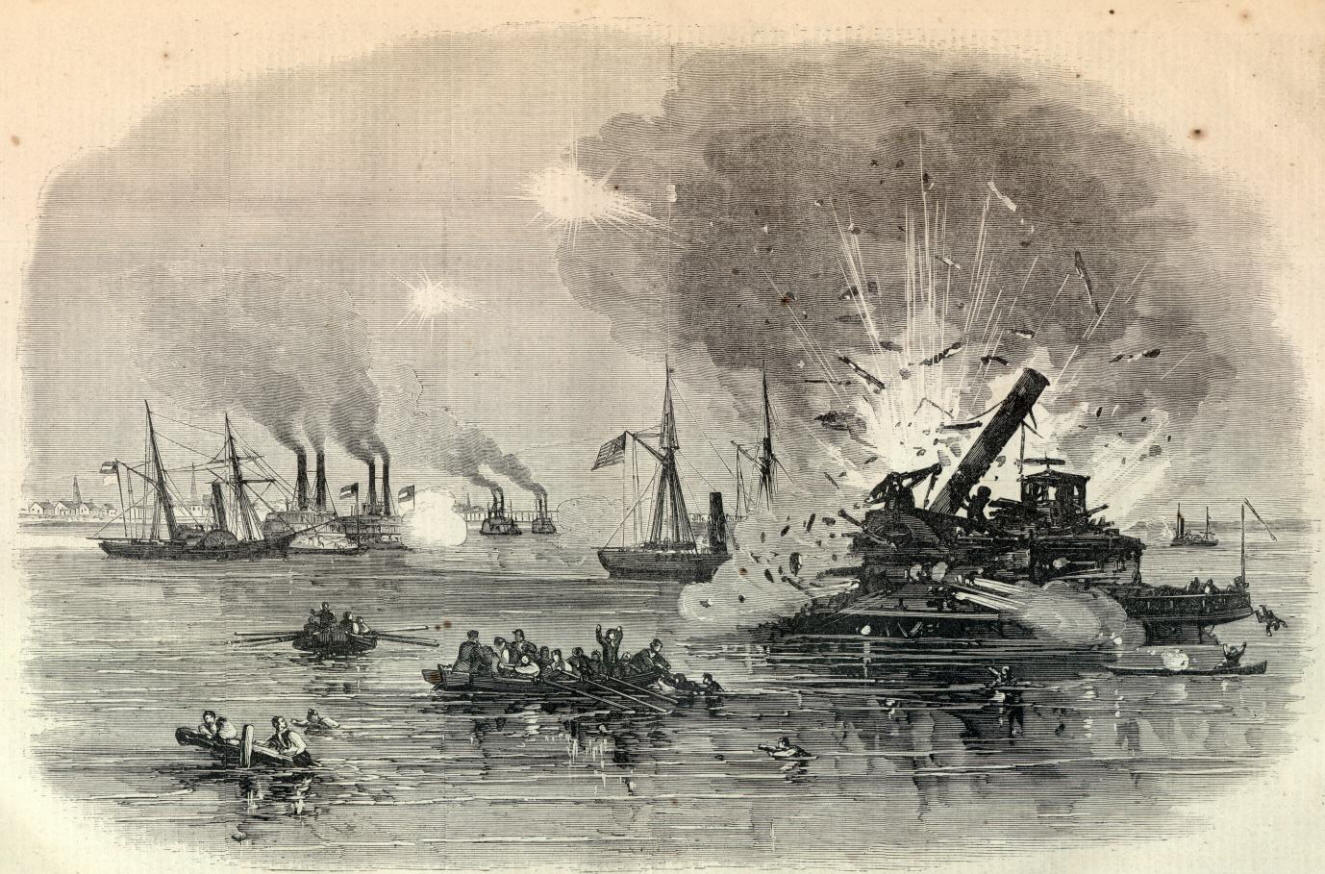

Captain Renshaw Blows Himself Up


In the Battle of Galveston in 1862, Union forces occupied the Confederate city for three months, blockading the largest Texas port. Confederate troops covered riverboats in bales of cotton to attempt to armor them against Union cannon. On New Year’s Day 1863 two Confederate riverboats tried to sneak into Galveston Bay. One ship was immediately sunk, and a small ground force was repelled by six Union warships in the harbor.
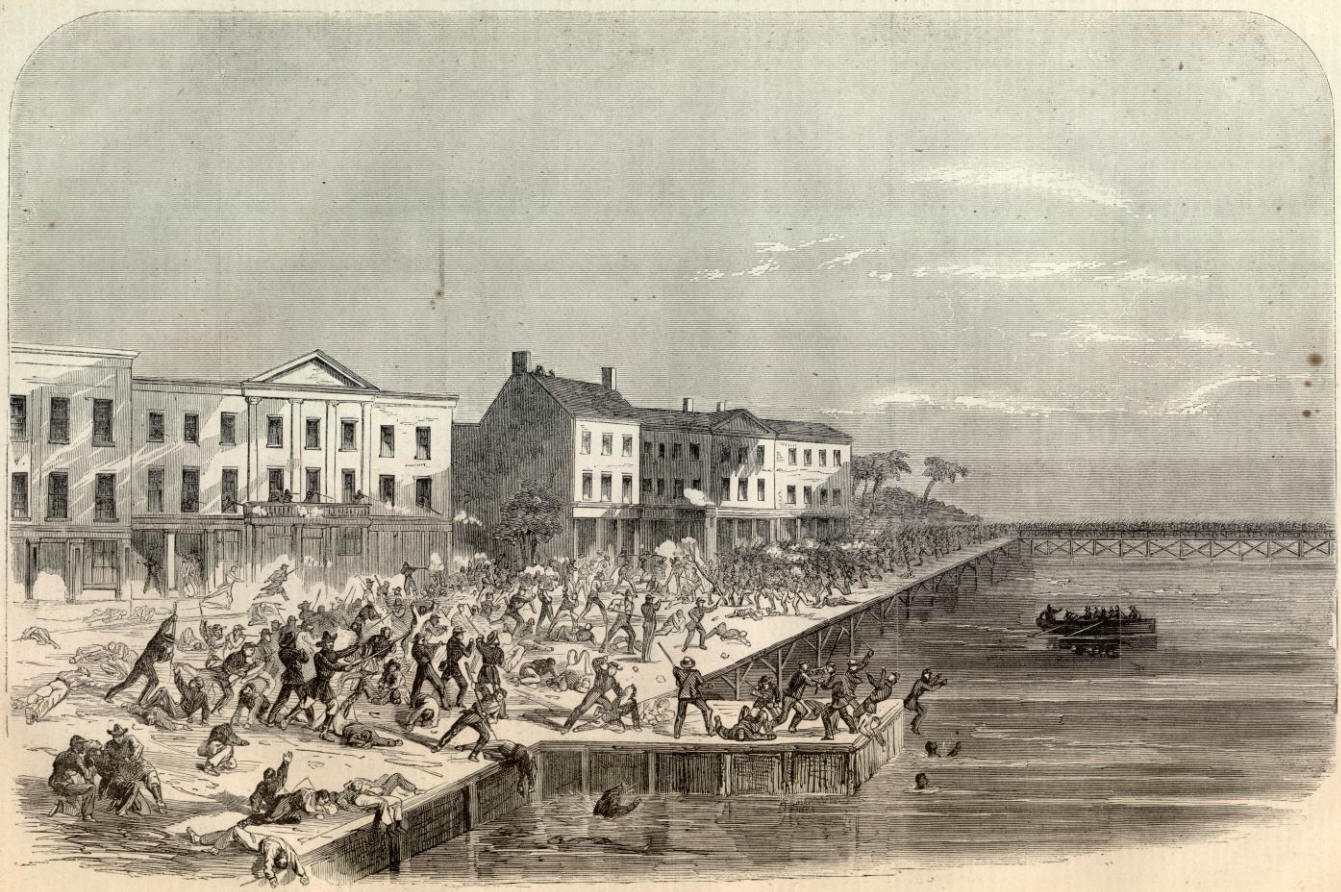


Confederate Irregulars Force Union Soldiers into the Sea

The apparent Union victory was thwarted when the Confederate Bayou City overpowered the USS Lane’s crew and the USS Westfield became moored on a sandbar. Both sides called a truce to consider their awkward positions. Captain Renshaw of the Westfield botched an attempt to destroy his ship to keep it out of enemy hands, and explosives killed Renshaw and 13 members of his crew. The other Union ships, confused if not defeated, headed out into open sea. The city remained in Southern hands for the remainder of the war, but the devastating blockade was restored in ten days.

Kemah / Clear Lake: The Home of Wholesome
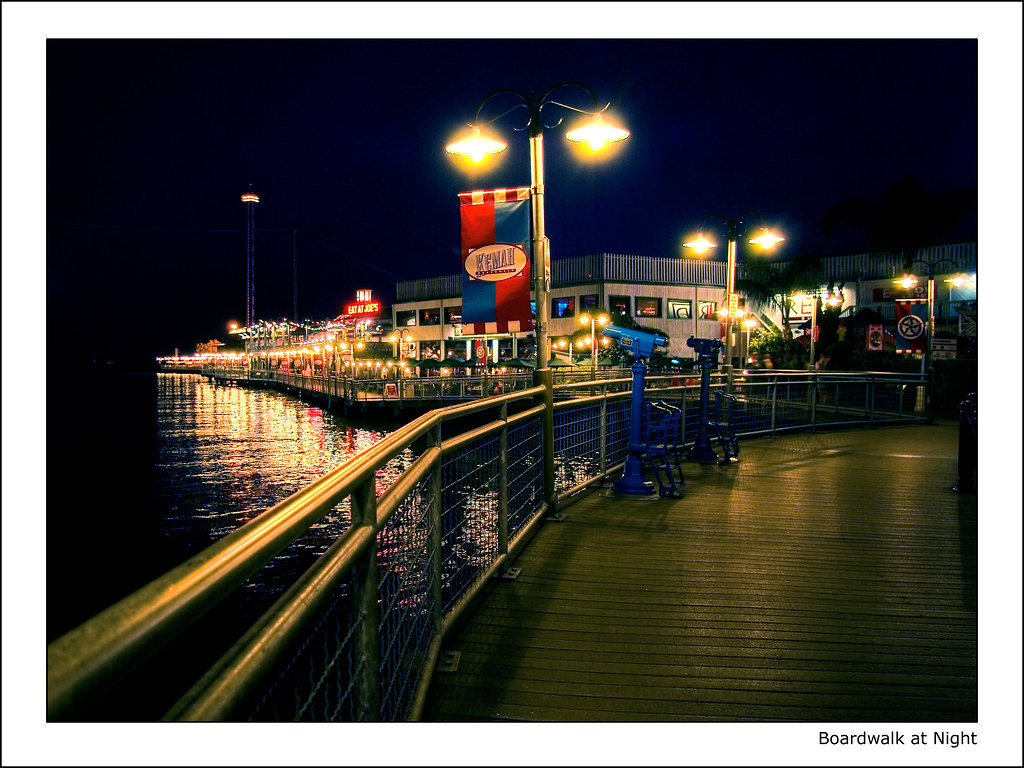


Suburbanites have built the Kemah harbor into a beautiful recreation area. Sailboats dot Galveston Bay, and Landry’s Restaurant has developed a Coney Island-style boardwalk, complete with carnival games and amusement park rides. The Boardwalk Bullet roller coaster was completed last summer.
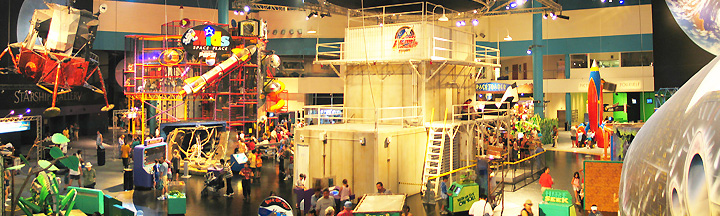


Space Center Houston


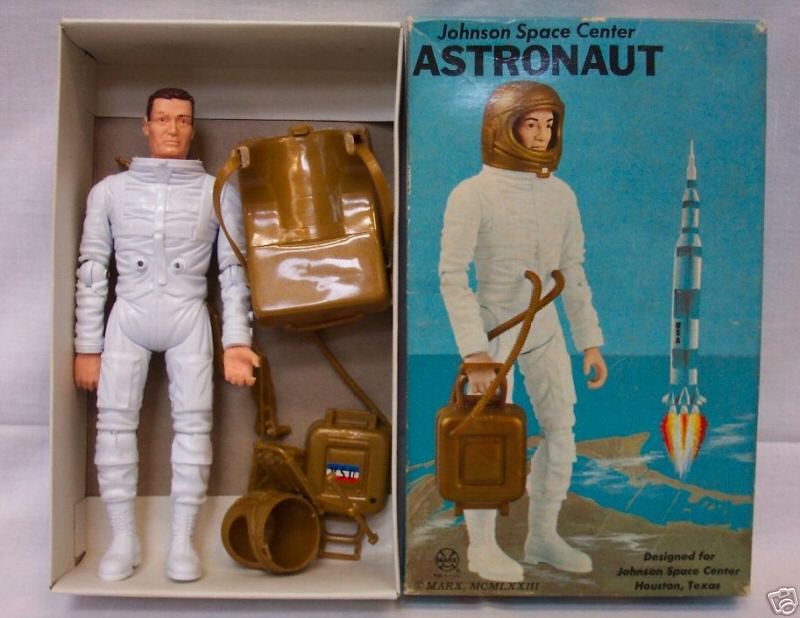
Johnson Space Center, the home of NASA, is in Clear Lake. Drawing many scientists and engineers from around the world, NASA and their thousands of contractors have brought a lot of technical prowess and entrepreneurial spirit to Houston, and crossover with the energy industry is fertile ground for industry. Space Center Houston is an attraction at Johnson Space Center geared towards families that features space-themed rides and educational programming.

Wednesday, July 2, 2008

Galleria: Drive, Don’t Walk


Uptown is what the Galleria Area would like to be called, and in relation to Montrose and Downtown the analogy is apt. The Galleria could give Beverly Hills a run for its money in plastic surgery and Bentleys.

A popular attraction for family photos and romantic walks, The Williams Waterwall is a multi-story sculptural fountain which sits at the south end of Williams Tower in Uptown. The tower, the fountain and its surrounding park were designed by architect Philip Johnson.
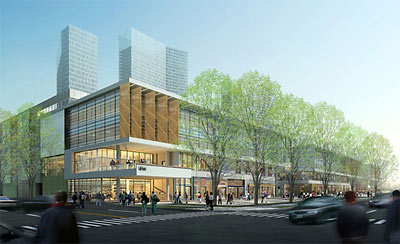

Cafe Annie @ BLVD via swamplot

Café Annie is one of the most celebrated restaurants in town. With sophisticated food and ever evolving tastes, the chefs here are really working it. Expensive menus make it a special treat, or try their food to share at Bar Annie, every afternoon, where the goodness can be had for much less. Located at Post Oak and San Felipe just north of Westheimer.

Many streets are excessively large, with eight lanes in some places. Street level architectural flourishes verge on the futuristic. The Galleria attracts the most protests in Houston due to high traffic, difficult police enforcement and the ability to easily cause havoc.


Janitors' Protest at Post Oak Blvd
NYTimes

Upper Kirby: Sprawl in the City


Megan at the House of Guys
Mr. Wright

The best think about Upper Kirby is House of Pies. This 24 hour establishment holds tender memories for many, and they have the greasy Monte Christo and O’Brien potatoes to prove it. The diner is always packed, but the crowd changes from elderly couples in the morning to second-hand businessmen and tourists in the afternoon. By nightfall groups of high school students have drank their weight in coffee. In the middle of the night the restaurant is affectionately known as the “House of Guys” for the flamboyant groups on their way home from a night on the town mixing with sleep deprived college students and tables of policemen. Offering a selection of early forty cakes and pies, there is never a bad time for House of Pies.
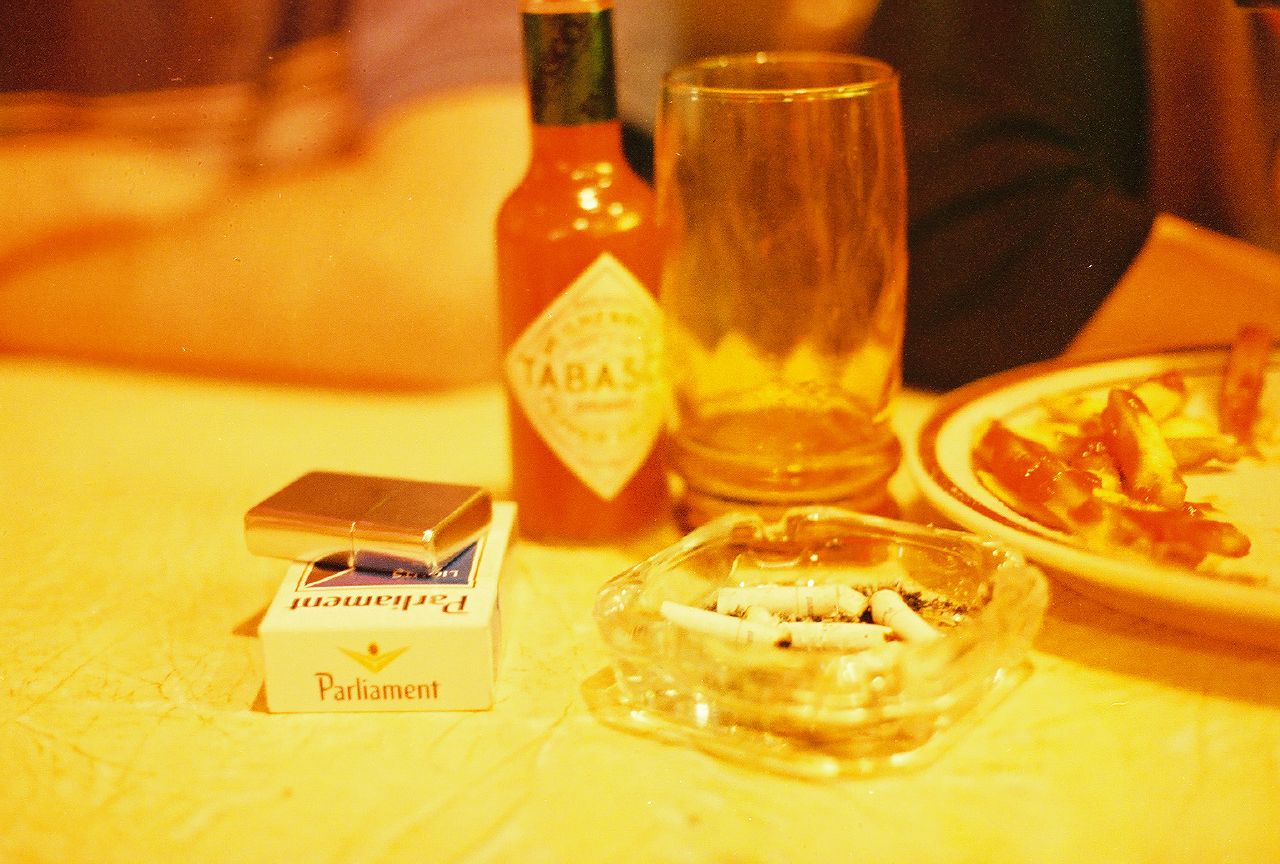

slackdarr

Driving down Westheimer, Alabama or Richmond will get you to either Montrose or the Galleria, and the streets of Upper Kirby are lined with many replica telephone booths which resemble those in London, as well as replica British mail boxes.


Reenactment of Ant Farm's Kidnapping Buckminster Fuller
julia.in.the.rye

Rice Village: Town in the City


Just south of the 59 Freeway on Kirby Drive, Rice Village is the local spot for the affluent neighborhoods of University Place and West University. Anchored by a busy Half Price Books at the corner of University Avenue, the Village has grown incredibly over the last few years, but if you can bear the traffic there is still a significant charm to the place. In addition to good shopping, the Village holds three French restaurants, two Japanese, two Chinese, two Italian, a Mexican, two Spanish, a Mediterranean, a Vietnamese, an Indian, and three Thai restaurants. The best Reuben in the world, with purple sauerkraut, can be had at Kahn’s Delicatessen on Rice Boulevard. Next door at Salento the cappuccino is always hot, the conversation in French and the music live jazz.
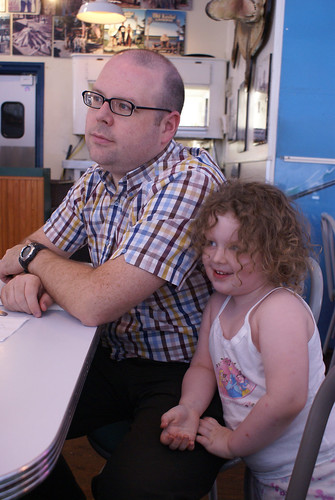

Lunch at Goode Company Seafood, Patrick and Eleanor
poopscape


Just off the Kirby exit at US59, at the corner of Westpark, Houston’s Restaurant serves exquisite meals that are both delicate and hearty. Nearby is the decadent Goode Co. Barbeque and around the corner on Westpark is Goode Co. Seafood, where everything is is fresh out of the Gulf. We always get a dozen oysters and iced tea.

Tuesday, June 24, 2008

Downtown Houston: Metropolitan Island
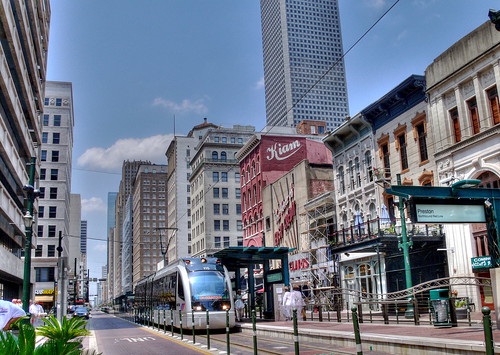

photo by j-a-x - props to houstonist


Houston is large, but definitely not urban. The one exception is downtown, home to corporations like Continental Airlines, Exxon Mobil and Halliburton. Many skyscrapers were designed by architect Philip Johnson, including Pennzoil Place- two towers, shaped like trapezoids with tops angled at 45 degrees. The tallest building in Texas is the Chase Tower, designed by I.M. Pei.


Pennzoil Place


High taste is also in good supply in downtown, where the theatre district boasts the second most seats in an American city, only beaten by New York. Book a ticket to the Alley Theatre for Shakespeare and David Mamet, or the Hobby Center for Jersey Boys and Sweeney Todd. The Houston Ballet, Grand Opera and Symphony are also located within the six square block Theatre District. On the shores of Buffalo Bayou, even more entertainment is in store. Verizon Theater is a major venue for pop, country and rock acts and the Angelika Theatre is the coldest movie theater in town. The Aquarium is a theme restaurant and small carnival featuring a roller coaster right next to sixteen lanes of traffic on the overpass.


Main Street was touted as a resurgent scene during the Super Bowl held in Houston in 2003, but the shine wore off soon after. There are many good bars between Capitol and Congress, but don’t expect a crowd. The best nights for downtown are when the Rockets, Texans or Astros have a game at home. Minute Maid Park is only six blocks from Main Street, and the Rockets arena, Toyota Center, is two stops away on the rail line. Texans games are played south of the Medical Center at the new Reliant Stadium next to the Astrodome, but the rail line means that fans can park elsewhere in the city without having to drive through traffic or pay for parking.


Notsuoh (Houston backwards) is a hole-in-the-wall speakeasy that has survived through thick and thin in downtown since the 70s, and the chess playing, Lone Star drinking crowd is unlike any on earth. Next door to the great old neon sign “Dean’s Credit Clothing”, Notsuoh is located on Main at Preston Street.


There is a system of tunnels under downtown Houston that forms a network of subterranean, climate-controlled, pedestrian walkways that link twenty-five full city blocks and house amenities like Ziggy’s Restaurant and Starbucks.


Can't forget Discovery Green... good press about it HERE and HERE and HERE and HERE and HERE (Flickr group)

Warehouse District: Artists and Yuppies


renegadebuddha


In the Warehouse District, artists’ warehouses still dominate the landscape, but the refurbishing of industrial buildings and construction of new apartment complexes and townhomes is changing the neighborhood from a sleepy backyard into the suburb that everyone forgot about.


See great art exhibits at Diverseworks and Fotofest or stop by the Last Concert Café for folk music and margaritas. Underground art events usually happen in this neighborhood, where neighbors are few and far between. Be warned that you should have explicit directions for getting somewhere in the Warehouse District, as the older streets are narrow and sometimes confusing.


Skeez 181


McKee Street Bridge

Midtown Houston: Little Saigon is now Little Manhattan
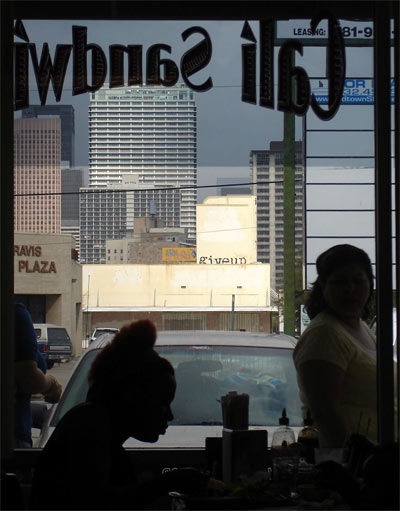

pic via swamplot

The Vietnamese community has created a thriving center for Vietnamese-owned businesses in Midtown, affectionately (and now officially) called "Little Saigon" a district characterized by street signs displayed in Vietnamese. Cali Sandwich, Van Loc and Givral’s Sandwiches are just a few of the great examples of Vietnamese cuisine to be had in Houston. Vietnamese Catholic convents and Buddhist shrines dot the neighborhood, and many stores are named in Vietnamese.


The neighborhood has undergone a radical transformation in the last two years, with mixed-use development creating pockets of urban living rarely seen in Houston. This has been complementary to the upscale clubs and restaurants which have opened here recently and excelled at making Midtown a destination for young professionals.


groovehouse


Midtown pdf map HERE

Sunday, June 15, 2008

Lisez moins, vivez plus.


Paris, May 1968

Lisez moins, vivez plus.
Read less, live more.
graffiti slogan; Paris, May 1968


I visited the Art Car Museum on the day that Robert Rauschenberg died. The whole world had seemed grey for weeks. Time was getting me down. May 1968 was forty years distant and the revolution that swept youth culture for the boomer generation seemed hollower than ever.


Mexico City Olympic Games 1968

The moment that was stolen from them, when McGovern lost to Humphrey and he handed the country to Nixon will never come back. Students around the world could not stop the war in Vietnam despite taking over universities in Paris, New York, Mexico City and Tokyo.


Nevertheless, this historical moment became the “end of history” as humanity plunged into desensitizing technologies. Today Postmodernism, for any philosopher with a beating heart, has become a pandering sophism in its middle age. It isn’t about any sort of logic for me as I write this, just about who I know and why, and I am beginning to believe it has always been that way.
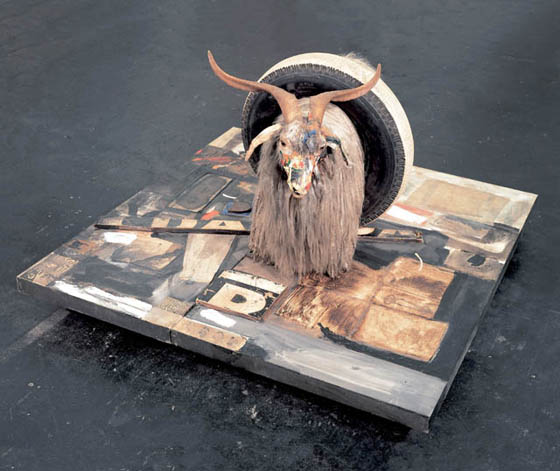

Robert Rauschenberg, Monogram, 1955-59

Coasting down the rail road crossing I passed the red gas station and the silver building, parked on some broken concrete and turned off the engine. The rain fell in light waves, the truck felt like a tin drum. I reached in my pocket for a pen, searched the seats for one, and checked the glove compartment to no avail. The only implement I found was a blue inkpad and a rubber stamp with two cartoons that said “Merci”. I was there to leave something for Tom Jones, tragically cut down by a drunk driver after the art car parade.

I brought eleven yellow daisies and one that had been dyed blue and glued with sparkles. The guy at the shop wrapped them in green and orange, which seemed weird. When I arrived there were a few people on the side of the road standing around a collection of flowers and fruit. Photographs, letters and ribbons covered the chain link fence on Heights Boulevard. Before I left the cab I held the waxy orange paper and stamped it “Merci” several times.

The loss of Tom Jones, a curator at the Art Car Museum, is a heavy burden for Houston. He sure knew a lot of people, but the news of his unfortunate fate reached far beyond his personality. Many who did not know the man should be sad to be deprived of the opportunity. I cannot say I had known him well, but it was a pleasure every time we spoke. With the temperament of The Big Lebowski and a slew of projects under his belt Jones knew where he stood and made no excuses.


Art, cars and art cars had been in his life since the founding of the museum in 1988, and earlier in the decade he was a part of the Urban Animals, working with the Lawndale Art Center and others to create the city’s underground art scene that thrives today in a myriad of storefronts, galleries, warehouses and street artists. Irreplaceable, Jones is remembered by many and is an inspiration to anyone out there with a sense of worth beyond monetary ambitions.


The loss of Robert Rauschenberg, two days after Jones’ terrible accident, is a turning point in interpretation of the second half of the 20th century. In a long and storied career the Port Arthur, Texas native who survived Abstract Expressionism, Pop Art, Conceptual Art, Neo-Expressionism and the 21st century never could be pigeonholed and thus never passed over. His continual artistic evolution reacted to his personal life. He collaborated in dance, performance, print, design and public sculpture with many big names in other fields. His continual successes made him an influential figure to generations of East Texan artists who identified with his expressionist style and eccentricity, as well as his conflicted reactions to his Christian roots.

I stood on the side of the road in the rain. I thought about two people I never knew so much who meant a lot to me as I felt ever more hopeless about politics and reason. My blue ink “Merci” stamps were already beginning to run. I borrowed a red lighter from a Star Pizza waitress and lit two sticks of incense in the pile left in memoriam. Photographs, toys, oranges, cards and letters, biker memorabilia, beads, candles and flowers lined the sidewalk.


Tom Jones, art car Swamp Mutha by Ann Harithas and others

“Keep America’s roads weird — build an Art Car!” -t.j.


Robert Rauschenberg, 1986 BMW 635 CSi Art Car

"The artist's job is to be a witness to his time in history." - r.r.